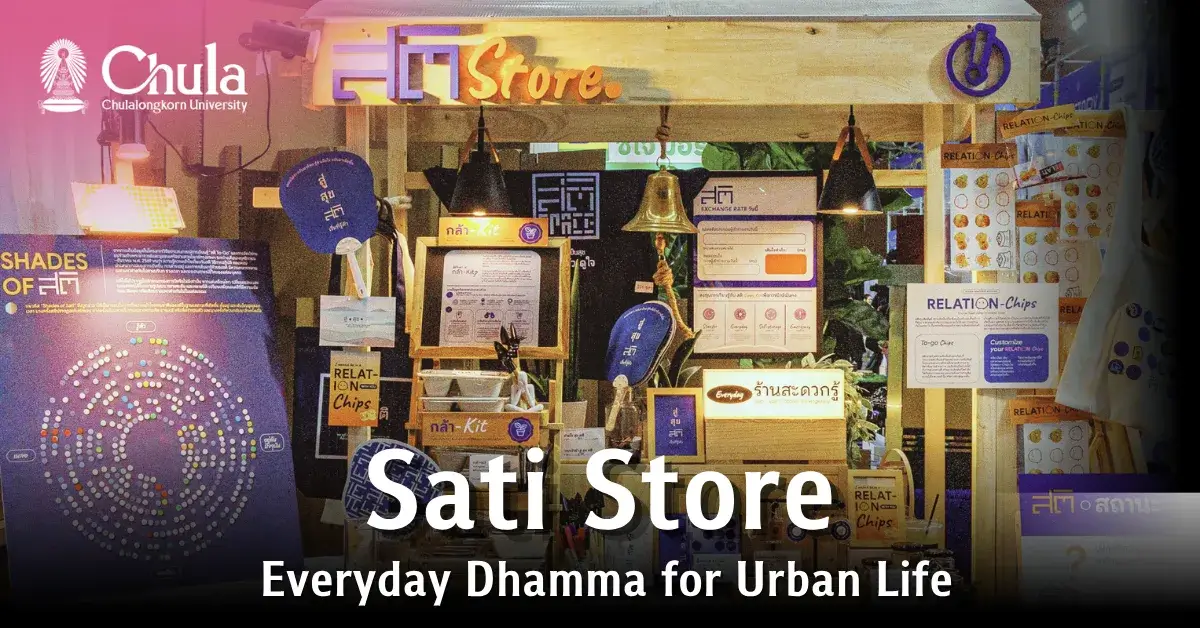


Chulalongkorn University’s Faculty of Fine and Applied Arts, in collaboration with Suan Mokkh Bangkok, has designed “Sati Store,” a mobile cart offering mindfulness activities and Dhamma-promoting products to city dwellers, with the aim to integrate Dhamma into urban lifestyles.
Highlights
- The Concept Behind “Sati Store”
- Convenience Store Exhibition: A Space to Explore and Understand the Mind
- “Convenience store for knowing”: A Shopping Center for the Mind in Daily Life
- Buddhist teachings are always relevant, especially in the social media age.
- The next step in the mindfulness path, " Convenience store for knowing " style.
When people think of “Dhamma” or “mindfulness,” they often picture going to temples, wearing white robes, attending Vipassana meditation camps, or chanting difficult-to-understand Pali verses. But when “Dhamma and mindfulness” come in a familiar “cart” with a sign that says “Sati Store,” people are drawn in, engaging in conversation and exchange ideas. Visitors inquired about the exhibition signs displayed next to the cart and the products on display, such as the “Mindful Happiness” Bag, the mindfulness fan, the mindfulness Kathina offering tree, etc.

Dr. Naputsamohn Junpiban
A lecturer in the Department of Creative Arts (Exhibition and Experience Design)
Faculty of Fine and Applied Arts, Chulalongkorn University
One of the individuals operating the Sati Store is Dr. Naputsamohn Junpiban, a lecturer in the Department of Creative Arts (Exhibition and Experience Design), Faculty of Fine and Applied Arts, Chulalongkorn University. As a designer and researcher, she explained the products and invited interested individuals to participate in games and learn mindfulness activities in daily life.
“For our store, the indicator of success isn’t sales volume or the number of visitors, but the ‘conversations’ that take place in front of the Sati Store cart. The fact that people of all ages can stand and discuss and exchange ideas about their mental state for hours without feeling like they’re being forced to listen to a sermon is proof that this innovation can transform Dhamma into something ordinary and tangible in society,” Dr. Naputsamohn explained the concept behind the health and well-being research and innovation project called “Sati Store” (Convenience store for knowing), an interdisciplinary collaboration between academics from Chulalongkorn University and the Buddhadasa Indapanno Archives (Suan Mokkh Bangkok) to find forms and innovations that integrate Dhamma and mindfulness practice in a way that is suitable and attuned with the lifestyle of urban dwellers.

The Concept Behind “Sati Store”
With the support from the Design Innovation Grant, Faculty of Fine and Applied Arts, Chulalongkorn University, Dr. Naputsamohn initiated a research process called “Co-design” to be used in co-designing between the research team, the community, and monks through three workshops since November 2025. The aim was to collectively understand what “mindfulness” looks like from a general perspective, and then use the conclusions to design activities and products to create learning experiences about “mindfulness.”
“Most urban dwellers view mindfulness practice as difficult and lack the time to go to temples. Teenagers and young people see Dhamma and mindfulness as boring. At the same time, the monks themselves lack the media or tools to communicate with the younger generation beyond simply listening to sermons,” Dr. Naputsamohn explains the idea behind designing “Sati Store,” a mobile cart that can move anywhere. This increases accessibility for urban dwellers in various areas and also serves as an experimental space for exchange of knowledge between monks and people in society, beyond temples or meditation centers.

The pressures and intense competition of fast-paced urban life can cause stress to build up, prompting city dwellers to seek ways to escape and protect their mental well-being. This project therefore takes the concept of a “convenience store,” representing the urban lifestyle that values convenience, speed, and ease, and transforms it into a ” Convenience store for knowing.” This space allows everyone to easily pick up mindfulness tips and practice simple mindfulness exercises seamlessly integrated into daily life, following the slogan “Your Daily Dose of Mindfulness — Don’t Check Out. Check In.”
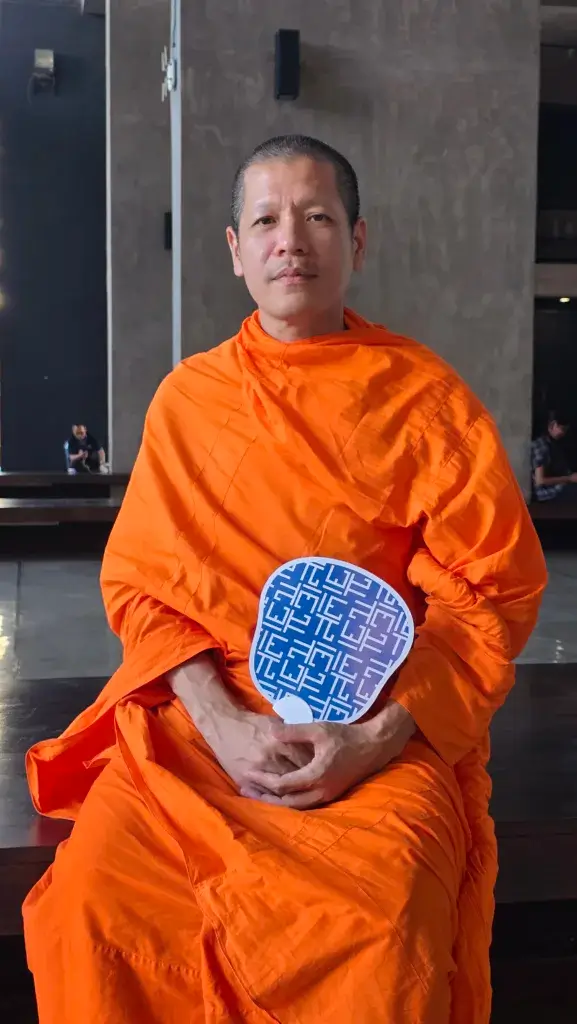
Phra Khru Thammarat
Wat Yanawesakwan (Project Advisor)
Phra Khru Thammarat of Wat Yanawesakwan (Project Advisor) spoke about the importance of mindfulness, pointing out that, “In truth, Dhamma is not something distant, but a part of our daily lives that we use unconsciously. For example, being mindful when walking up the stairs to avoid falling, or pressing the elevator button for the correct floor. However, the problem for people today is that when faced with minor suffering and it’s not cleansed, those negative feelings accumulate in the subconscious. One day, simply one single provocative word can cause a person to lose their temper, quarrel, or even become so violent that they don’t want to continue living.”
Although mindfulness is emphasized in Buddhism, “mindfulness” is a universal language accessible to people of all religions, whether Christian, Muslim, or those without religion, said Phra Khru Thammarat.
Convenience Store Exhibition: A Space to Explore and Understand the Mind
The unique feature of the Sati Store is that it provides a space for people to experiment with their own mental states. Inside the Convenience Store are creative activities including:
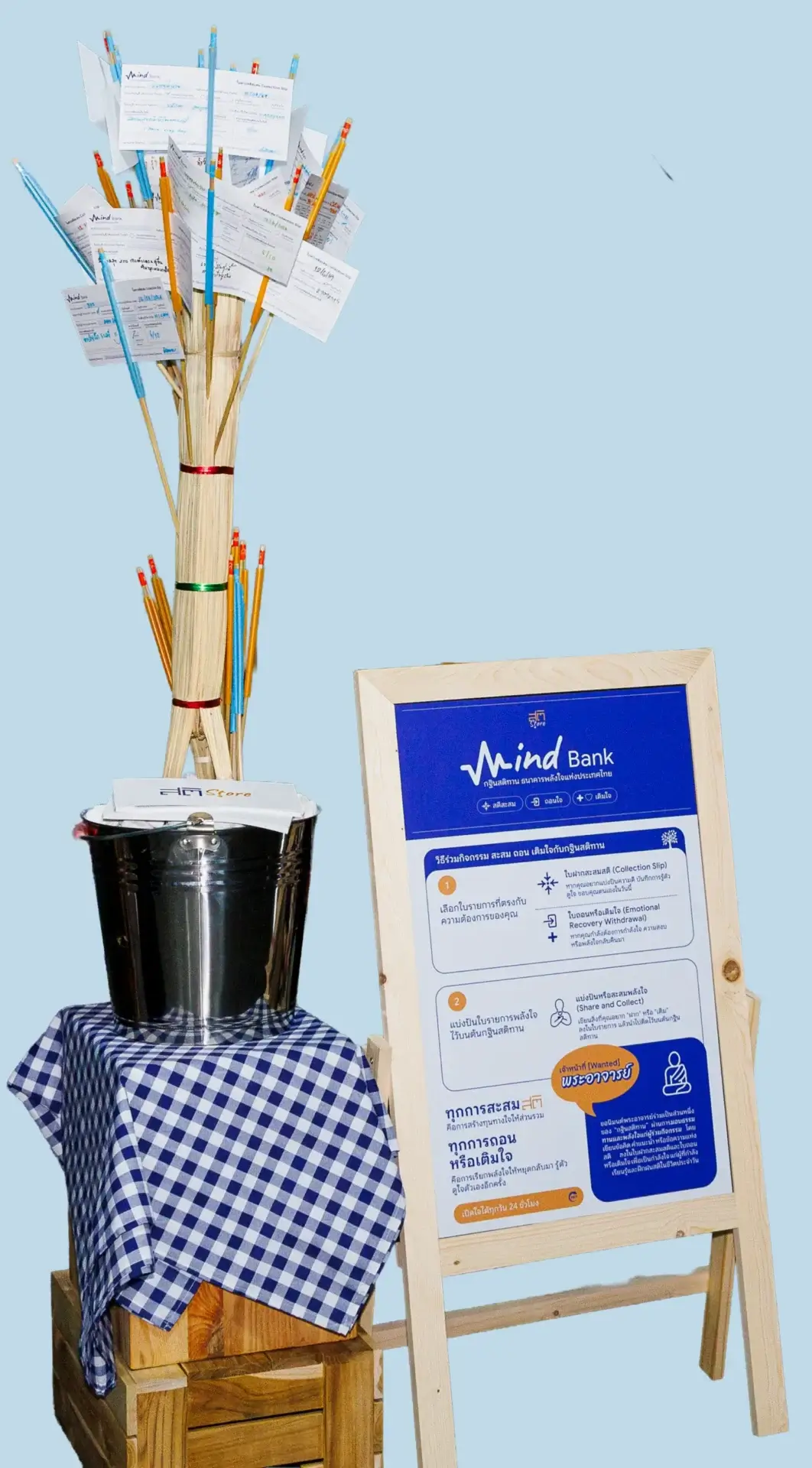
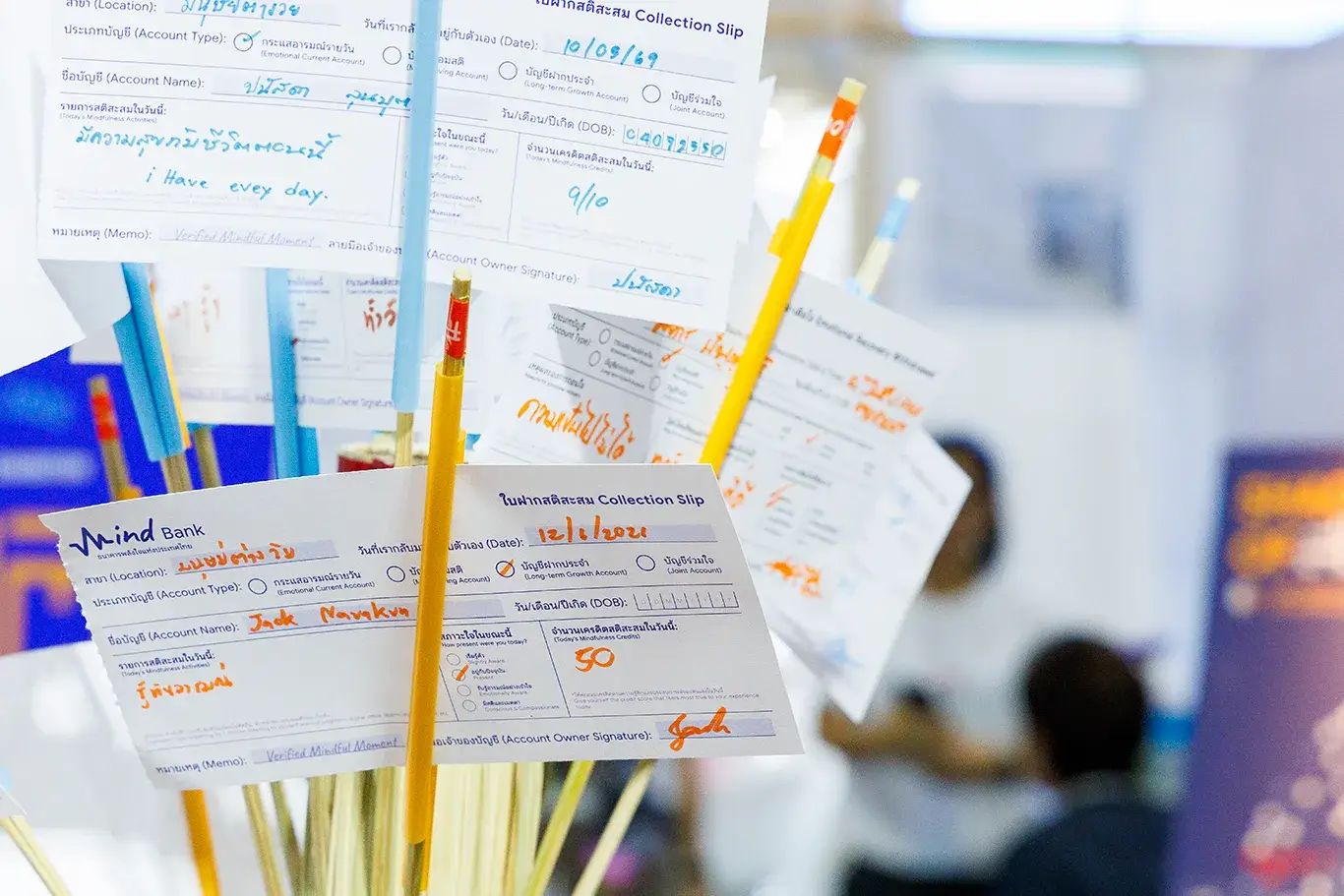
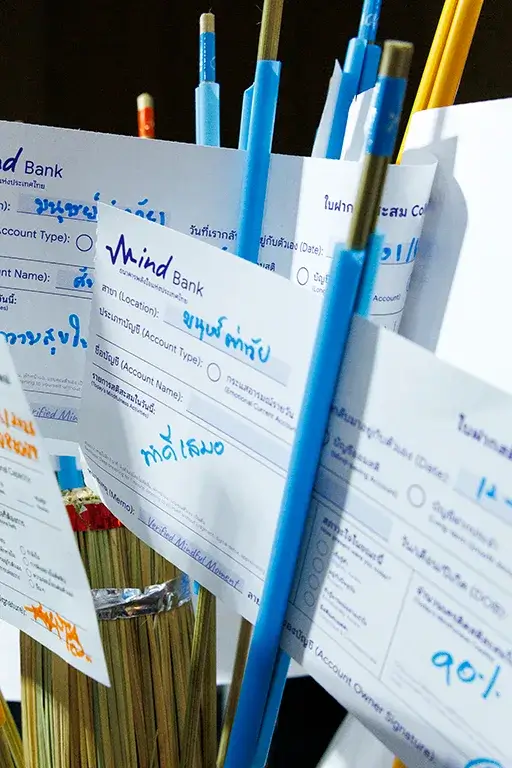
- “The Mindful Kathina Offering Tree” : An adaptation of the traditional Kathina offering tree in temples. The “Mindful Kathina Offering Tree” project will have deposit and withdrawal slips, similar to a bank account. Those who feel they manage their emotions well can write messages on the “Collection Slip” and attach it to the “blue stick” before planting it in the Mindfulness Tree. Those feeling stressed or overwhelmed by negative emotions can write down their feelings on the “Emotional Recovery Withdrawal” slip, attach it to the “orange stick,” and plant it in the Mindfulness Tree as well.
Dr. Naputsamohn explained that, “This activity is about giving through sharing experiences. Those who read the messages on the deposit and withdrawal slips will feel that they are not alone, but that they have friends who feel similarly. Furthermore, all stress data will be collected as a “Sati (Mindfulness) Exchange Rate” to be used as a social database in the future.”
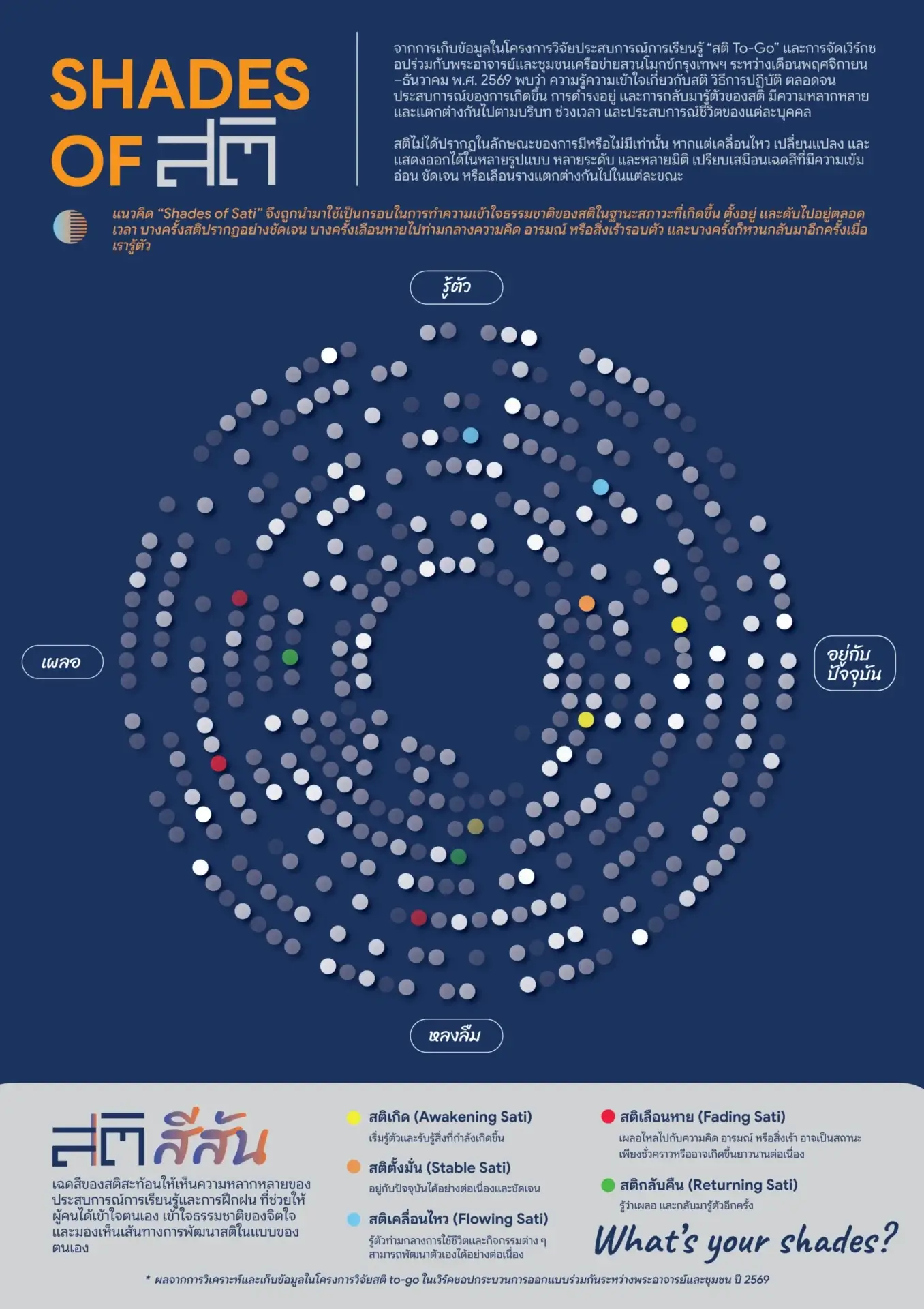
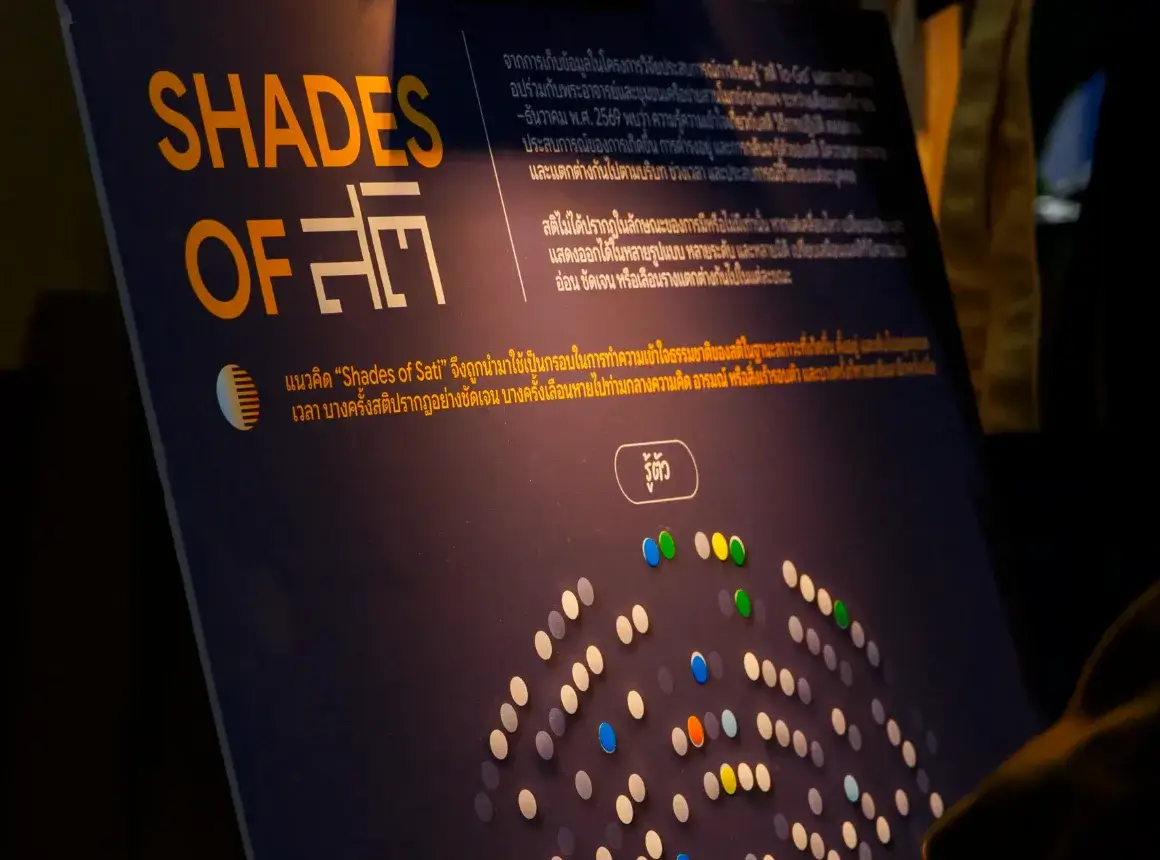
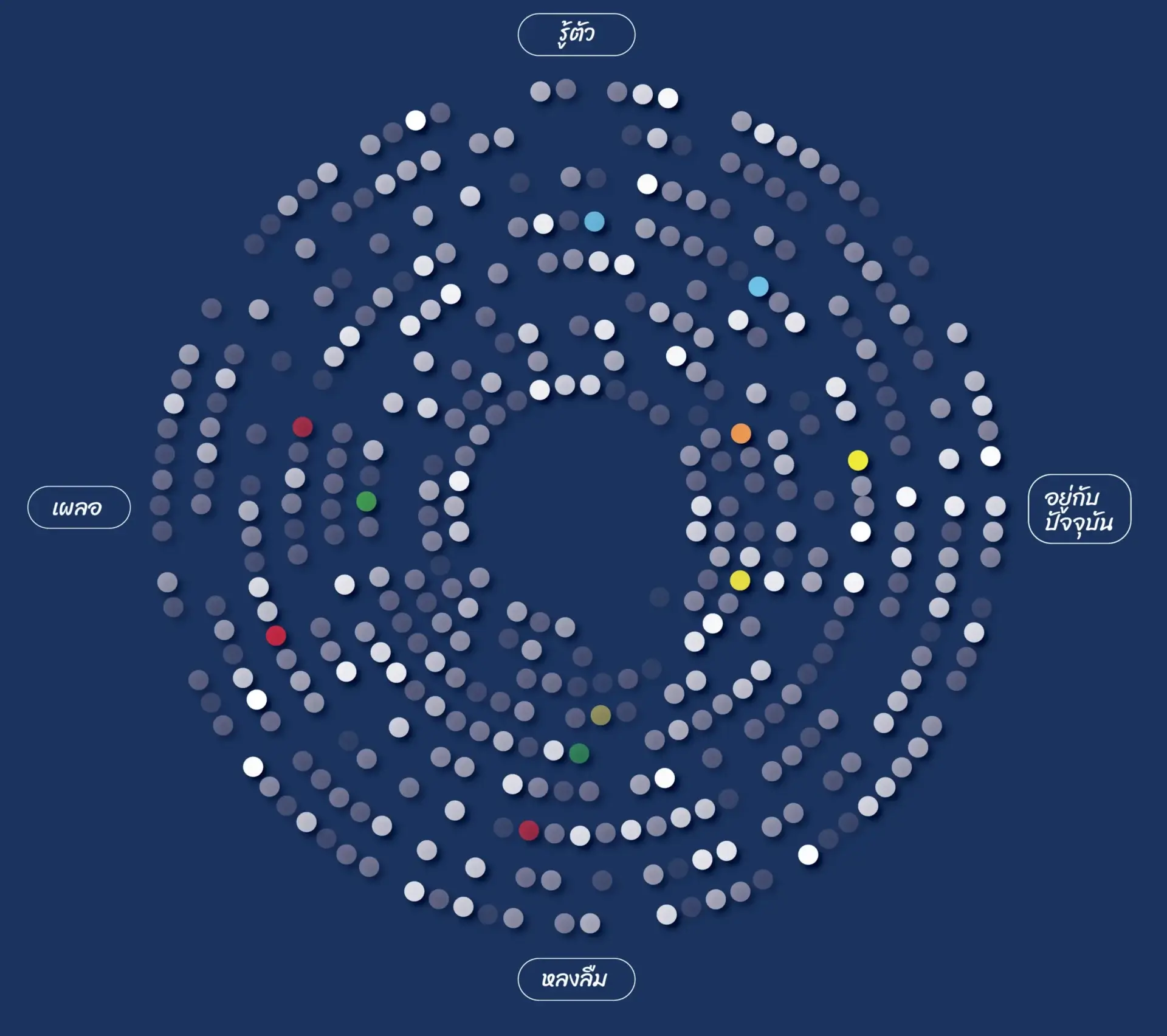
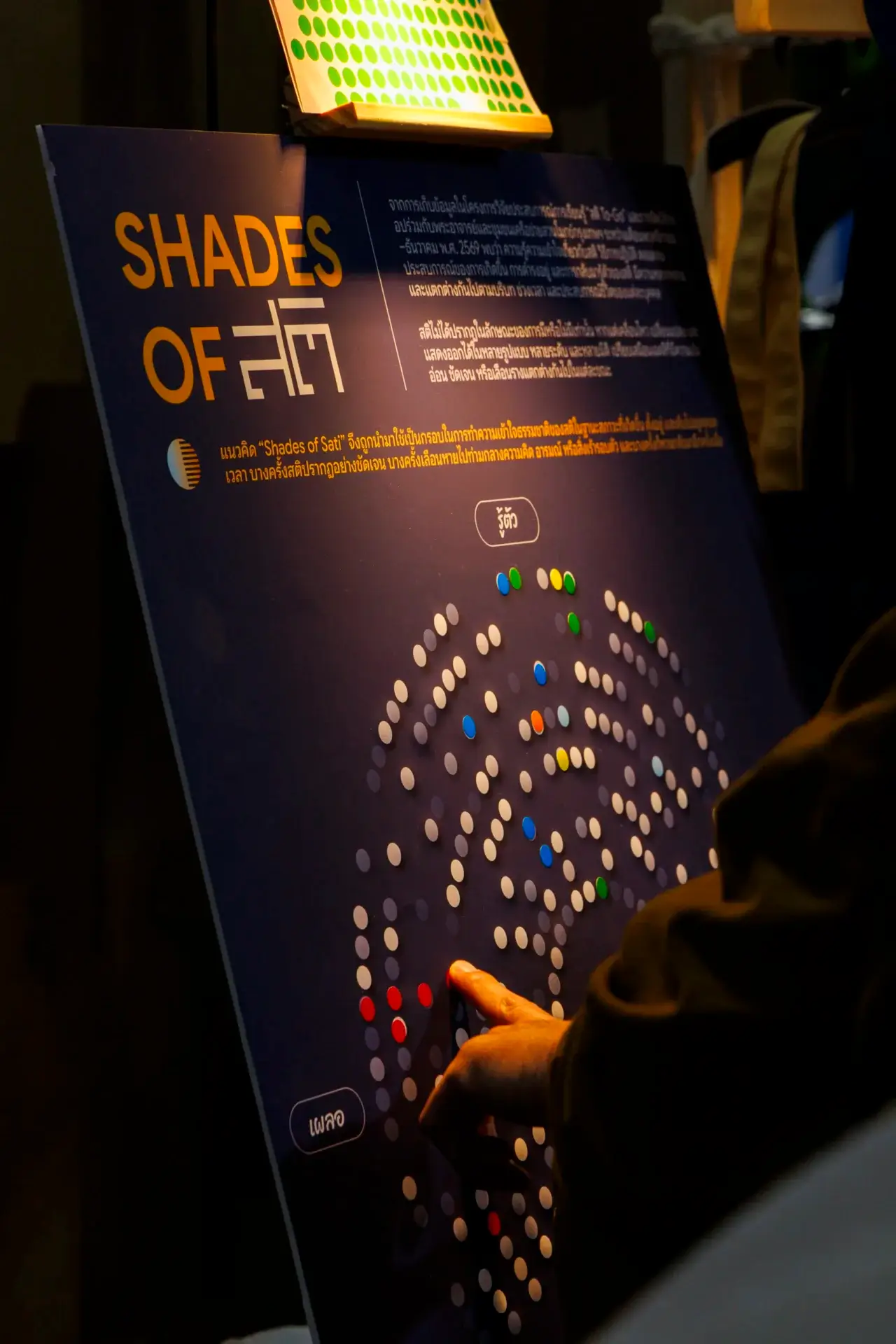
- “Shades of Sati” : This activity checks the level of mindfulness arising and ceasing, determining which shade each person possesses. Because mindfulness does not appear only as its presence or absence, but rather moves, changes, and expresses itself in many forms, levels, and dimensions, much like shades of color. We therefore divide mindfulness into 5 colors as follows:
- • Awakening Sati (Yellow): Beginning to be aware of and acknowledge what is happening.
- • Stable Sati (Orange): Staying continuously and clearly in the present moment.
- • Flowing Sati (Blue): Being aware amidst daily life and activities, and able to continuously develop oneself.
- • Fading Sati (Red): Getting carried away by thoughts, emotions, and stimuli; this may be a temporary state or a long-lasting one.
- • Returning Sati (Green): Recognizing that one has wandered and returning to awareness.
“Mindfulness – Sati Mai Tok Krapong” : An activity that invites participants to randomly pick a card from a mindfulness can (shaped like a canned sardines) and read a message representing a situation that occurs in daily life. Players are then asked to consider how they would react if they encountered such a situation. For example, the situation of “receiving an offensive comment from a colleague.”
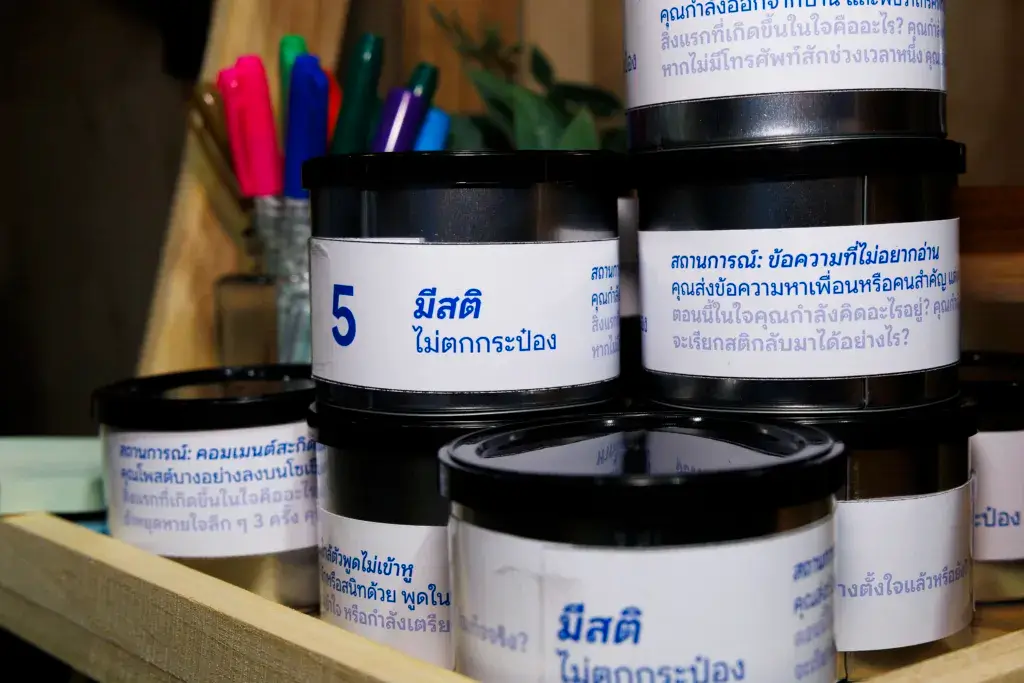
“We want to invite everyone to pause and reflect: Do we usually listen to understand, or do we listen to prepare to react immediately? And when we can detach ourselves and awaken mindfully, we can manage the problem at that moment.” And it prevents you from being left behind,” said Dr. Naphasamol. “Experimenting with thinking ahead about how we will respond to various situations will prepare us. The answers we reflect on during this activity will be ‘mindfulness’ that reminds us if we encounter similar situations in real life.”
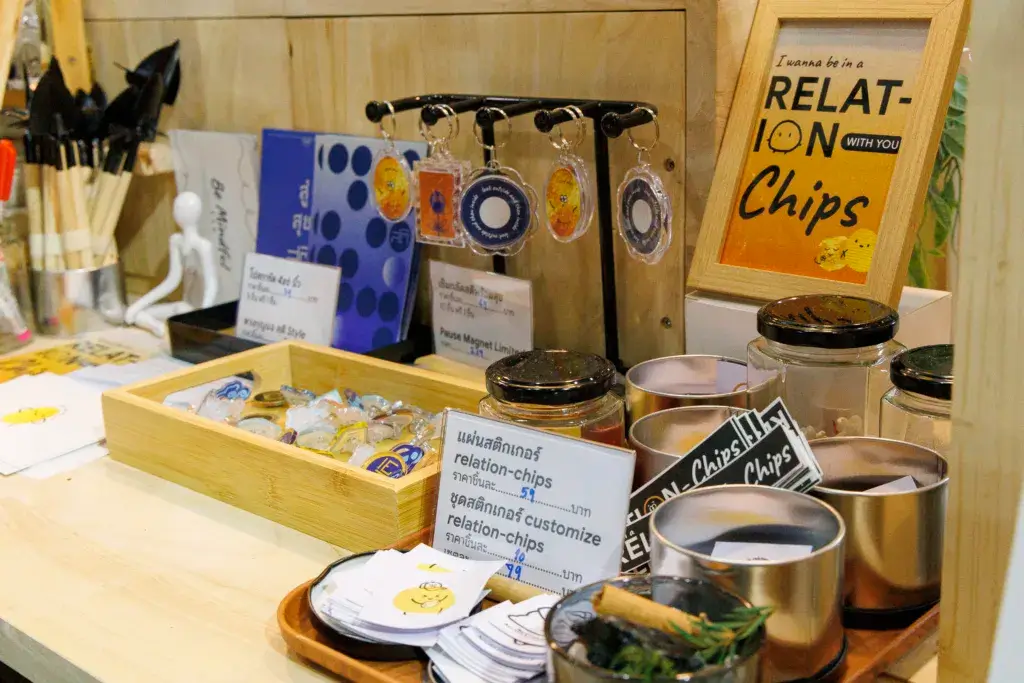
- “Relation-Chips: Mindful Relationship Building” : This activity invites everyone to explore the relationships around them. “Because good relationships don’t happen on their own, but are gradually nurtured through caring, listening, understanding, and supporting each other every day.” At the convenience store, there will be potato chip stickers for each person to choose from, corresponding to their current relationships, to reflect on which relationships they might want to nurture, express gratitude for, fulfill, or listen to more, etc.
Ms. Sasawan Chirayus from the Dhamma Communications Department of Suan Mokkh Bangkok recounted that when the Sati Store mobile cart was displayed at various festivals, people of all ages would approach it and discuss mindfulness throughout the day without feeling like they were being taught Dhamma.

“Convenience store for knowing”: A Shopping Center for the Mind in Daily Life
In addition to the mindfulness learning exhibition, the Sati Store also features several “lifestyle products” designed by decoding the behavior of urban dwellers, including:
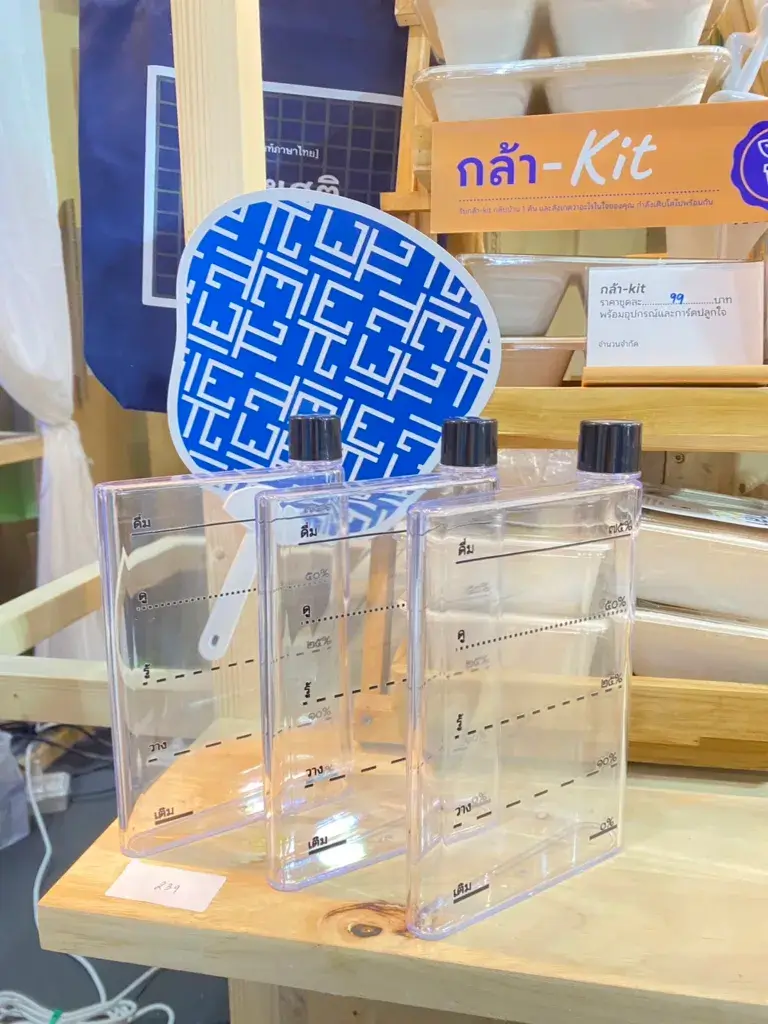
An A5-sized water bottle screen-printed with the words “Drink, See, Know, Refill, Place.” Dr. Naputsamohn explained, “This item is a result of observing the behavior of office workers who work from 8 am to 5 pm, on autopilot, unaware of what they do throughout the day – whether they drink water, what they eat. This group often only has two periods to pause and reflect on themselves: when drinking water and when going to the restroom. Therefore, we designed an A5-sized water bottle with the reminder message “Drink, See, Know, Refill, Place” to remind them that it’s not just about drinking water.” • Refresh your body, but also “recharge your mind” and let go of stress.
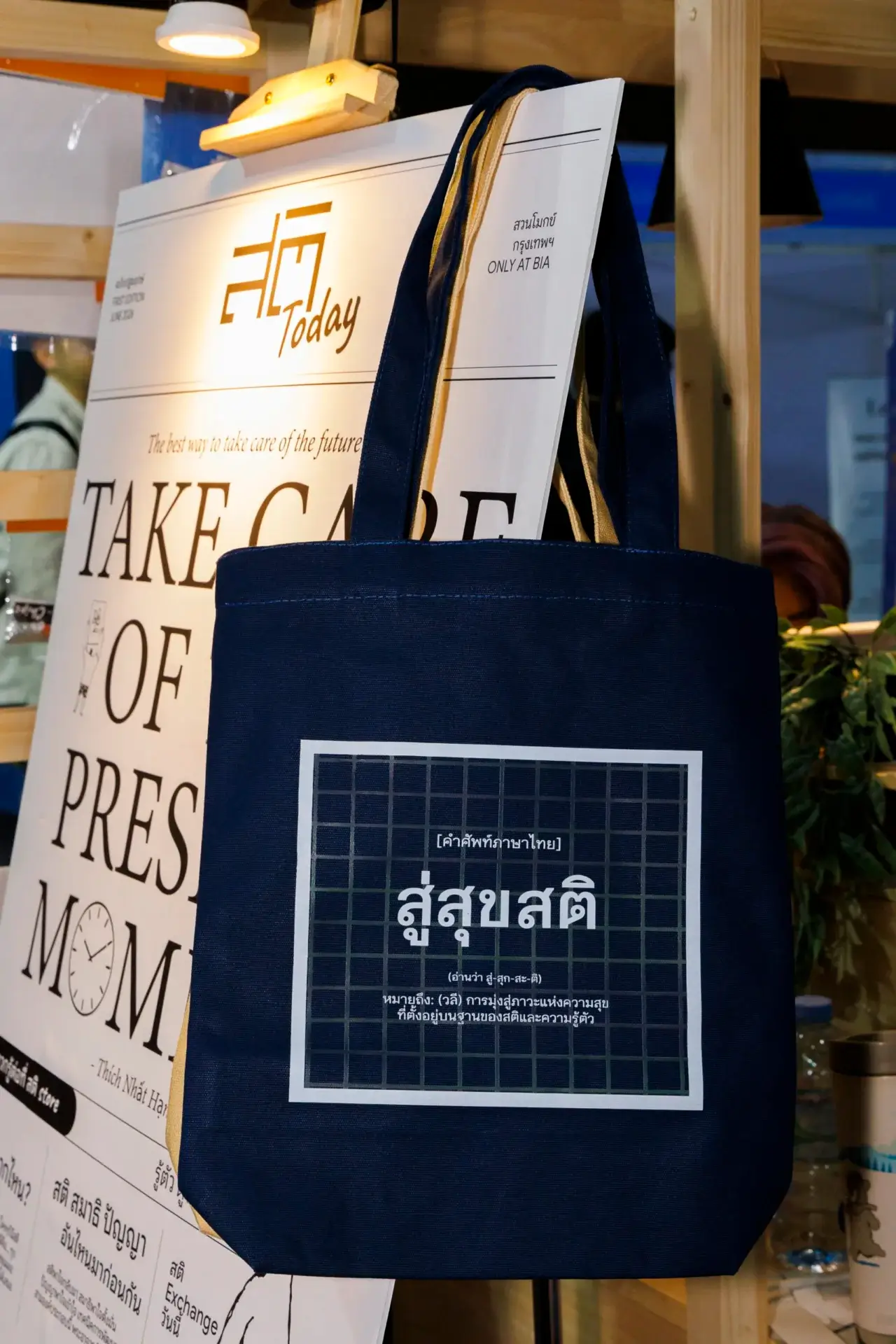
“Mindful Happiness” Bag and Reminder Pin : A bag shaped like a monk’s bag, featuring a hidden gimmick of polka dots reflecting the arising and ceasing of mindfulness, along with the blessing “Mindful Happiness,” meaning happiness based on mindfulness and self-awareness. Users can also choose from various reminder pins, such as a mindful money pin (reminding mindful spending), a binoculars pin (symbolizing observation), or a meditation pin. These small tools will greet you when you look in the mirror or when you’re feeling frustrated, instantly bringing you back to your breath.


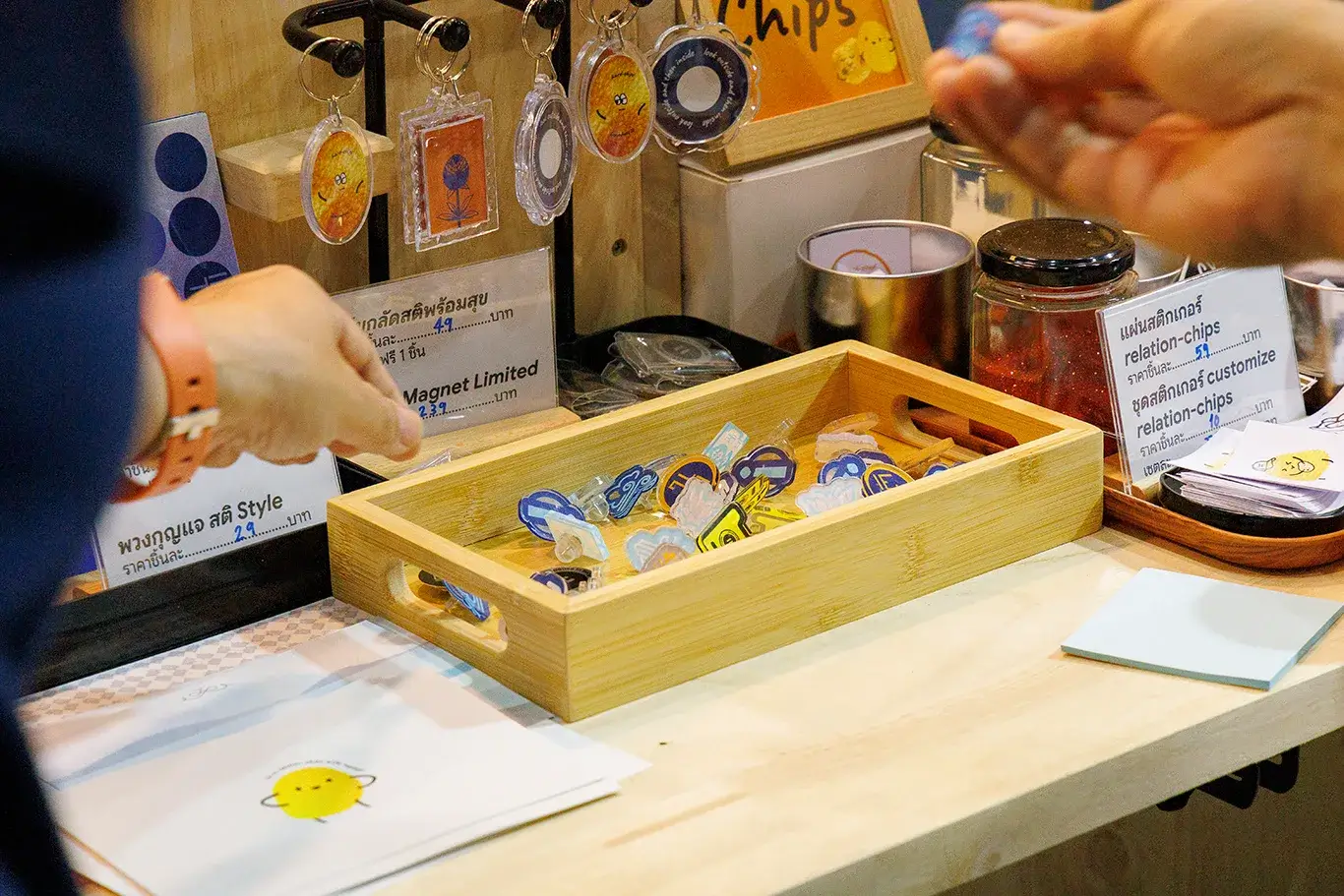
- Cooling Fan & Healing Keychain : A “fan” for those who get hot easily, which, when used to fan the body, serves as a mindful reminder to cool down the heat of the mind. Or a cute “figurine keychain” that you can talk to and vent your troubles with, serving as a means of communicating with yourself and returning to present moment awareness.
Project Advisor Phra Khru Thammarat stated that the “Sati Store” functions as a “shopping center” for the mind, offering people the opportunity to try and “shop” for mindfulness-stimulating tools that suit their preferences. For example, those who get hot easily might use a fan, some prefer carrying a shoulder bag, and others like keychains with figurines.
“When these items are designed with reminder messages, they act as nudges to bring us back to our breath when our minds are agitated. When we have ‘mindfulness,’ we become aware of our emotions. When we are aware of our emotions frequently, we develop ‘wisdom’that overcomes defilements such as greed, anger, and delusion, preventing them from having influence over our minds. Observing the arising and ceasing of emotions through everyday objects is, in reality, guiding city dwellers towards the practice of ‘Vipassanā meditation’ without them even realizing it.”
This aligns with the perspective of Phra Ajarn Paisal Visalo, who visited the ” Convenience store for knowing ” at Suan Mokkh Bangkok. Ms. Sasawan from Suan Mokkh Bangkok recounted that Phra Ajarn Paisal offered the following view: “For people today, small items with direct messages can be more effective and impactful in bringing them back to their senses than wearing amulets, because amulets don’t speak directly to us.”
In terms of “bringing back to mindfulness,” Ms. Sasawan shared her own experience, saying, “These items quickly reduced my anger level from 10 to 5, which helped prevent or reduce violent confrontations. Furthermore, seeing a small encouraging message like, ‘Are you tired? Have you eaten today?’ on a mindfulness-boosting slip can even save someone from suicidal thoughts in that very moment.”
Buddhist teachings are always relevant, especially in the social media age.
Phra Suksan Subhattho, a Buddhist lecturer who has worked closely with teenagers, commented that mindfulness isn’t difficult, but religious institutions have made it seem lofty and unattainable. “Recommunicating Buddhist teachings doesn’t necessarily require bringing people to temples, but we can ‘add’ Buddhist teachings to the spaces where people are.” Even in the online world of games like Roblox, if we understand their language,”

Phra Suksan Subhattho
a Buddhist lecturer
Phra Suksan explained the importance and necessity of finding tools to communicate effectively with urban dwellers and those in the social media era. “The immense suffering of people in the social media age comes from seeking ‘value’ from likes and social acceptance, comparing themselves to the false image of success of others, leading to depression and loss of self.”
The pitfall that makes urban dwellers unhappy is “setting too many conditions” for their lives, Phra Suksan cautioned us.
“We often condition ourselves to only meet good people and eat only perfect and delicious food. When something slightly different happens, we readily get frustrated and refuse to be happy. Mindfulness practice is about reducing those conditions and daring to embrace all emotions that come our way, whether sadness, loneliness, or discouragement, viewing them as friends who come to visit.”
The key to “mindful happiness” is “unconditional self-acceptance,” Phra Suksan explained, using an analogy: “When we raise a puppy that chews up the sofa or a kitten that breaks the TV, we still see its cuteness and easily forgive it. But why is it that when we make mistakes, we react differently?” Why don’t we allow ourselves to be like that puppy? Why don’t we love ourselves unconditionally?
“Modern humans of today fear ‘sitting still with themselves’ because they fear unresolved pasts resurfacing. They choose to scroll through social media feeds to find dopamine to mask their feelings. Mindfulness is the courage to confront your feelings, allowing yourself to be sad, lonely, or angry without berating or judging yourself.”
The next step in the mindfulness path, “ Convenience store for knowing ” style.
This innovative approach has garnered overwhelming interest from “the younger generation,” which Dr. Naputsamohn reflects on as its core message.
“In the past, Dhamma was often tied to difficult-to-understand Pali terms, or even the phrase ‘be mindful’ was used in a reprimanding way, becoming a negative term. The design of Sati Store revolutionizes this traditional image of Dhamma, transforming the abstract into a modern, contemporary, and practical product.”
Currently, the Sati Store project has a long waiting list for its mobile carts to be placed in various locations, including hotels, hospitals, banks, and even Wat Pho, which is interested in using them as souvenirs that effectively communicate Dhamma. Dr. Naputsamohn believes that Sati Store will be a model for interdisciplinary research that can be expanded to other aspects of well-being, such as a good death and a good life.
Most recently, the Sati Store project received a Top 3 Finalist award in the Creative Excellence Awards , by the Creative Economy Agency (CEA) category for Creative Wellbeing Award and plans to disseminate its concept internationally, aligning with the vision of Phra Khru Thammarat. “Hopefully, in the future, we might see ordinary products like tissue paper or water bottles designed for mindful and wise consumption.
“The Sati Store doesn’t encourage people to blindly purchase things at the urgency of capitalism, but rather to use ‘wisdom’ to be aware of the value we gain from purchasing these items. Observing oneself before deciding to pick up an item is a way to practice restraining desire and shifting from living according to social trends to living truly mindfully and wisely,” said Phra Khru Thammarat.
The ultimate ‘Sati Store’ isn’t in the cart, games, exhibitions, or products, said Dr. Naputsamohn.
“Simply allowing yourself to pause, take a deep breath, explore how your heart feels right now, or just go out for some vitamin D and look at the sky… just like that, you can open the ‘Sati Store’ to nourish your mind anytime, every day.”
For inquiries about the “Sati Store Cart,” please contact the page https://www.facebook.com/SatiSpaceBIA/?locale=th_TH